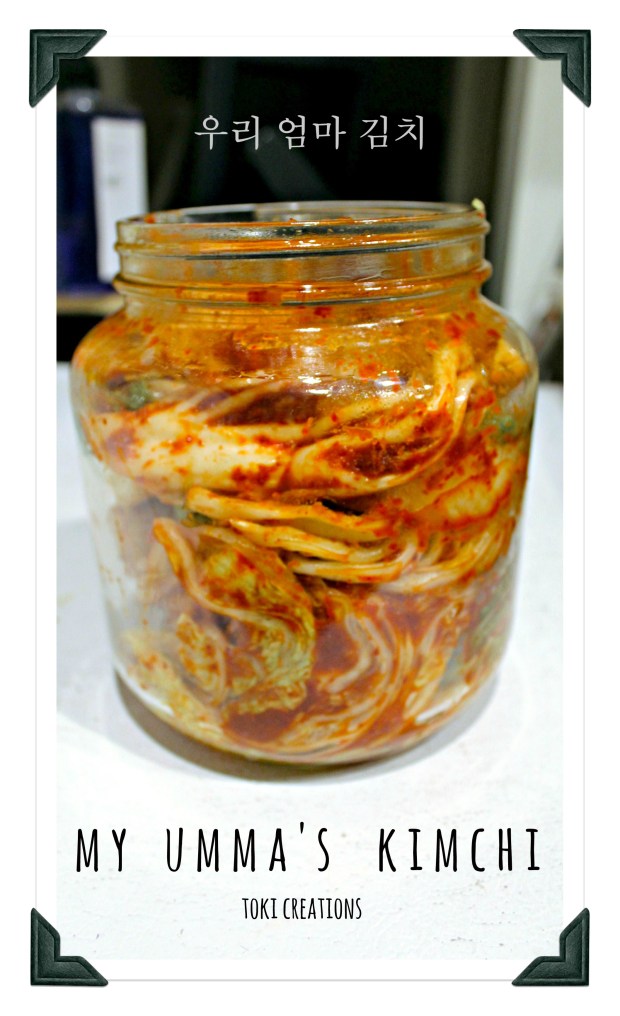
Umma’s Kimchi (Napa Cabbage Kimchi)

IMG_1839_ummakimchi

I have a confession to make.  I am Korean.  Okay, that wasn’t my confession.  Here it is:

I am Korean.  And I buy my kimchi.  -_-  I know, I know.  I don’t deserve to lay claim to my Korean roots if I don’t make my own kimchi or own a kimchi refrigerator.  (Yes, there is such a fridge and it keeps kimchi and regular produce fresh forEVER!)  But wait, do you know what kimchi is?  It’s only the best, tastiest, and healthiest Korean mealtime staple with natural probiotics and lots of Vitamin A and C.  Basically it’s fermented Chinese cabbage (can also be made from a variety of other vegetables and seasonings) that is eaten as a side dish and ranges from mild to spicy, to watery, to fishy.

My mom’s visiting and I’m taking full advantage of her Korean cooking skills and documenting her kimchi-making process so I can try to replicate it next time I run out of her kimchi.  I’ve made kimchi by myself once before in my lifetime and I must confess it was a fail.  My mom sort of walked through the steps and ingredients with me over the phone and I tried to mimic it… and well… it just wasn’t the same.  Hopefully, standing over her shoulder and breathing down her neck while watching her make this kimchi will help me the next time I attempt it.  We sort of measured the ingredients as she went along because, like many Korean moms out there, her measurements and recipe is in her head and her hand.  She just sort of eyeballs it and adds more or less by taste.  I was probably frustrating her whenever I stopped her to measure the ingredients 🙂  but she was super patient with me.  So here is how my mom makes her kimchi:
 

IMG_1752

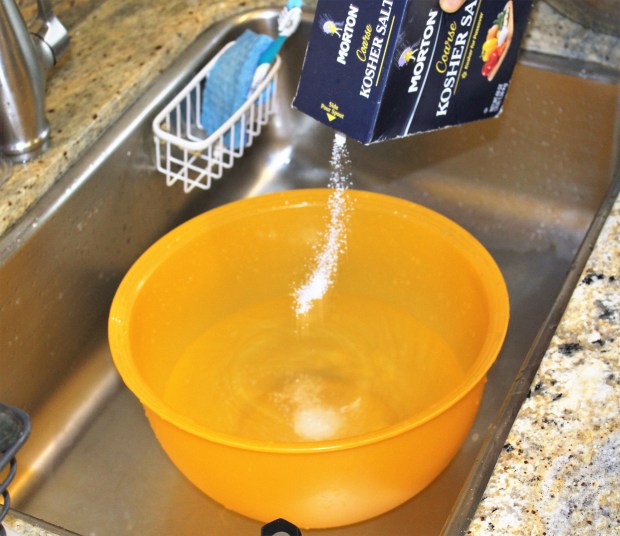
Add lots of salt to a bucket of water (should taste like the sea). We used Kosher Salt because I don’t have Kimchi salt, but my mom prefers to use Kimchi salt (which might be the same as rock salt).


IMG_1755

Slice your cabbage in half, vertically.

IMG_1754

Slice again, so you have quartered your cabbage. Cut off the hard core/stem, but we want enough of the stem to keep the leaves together.

IMG_1758

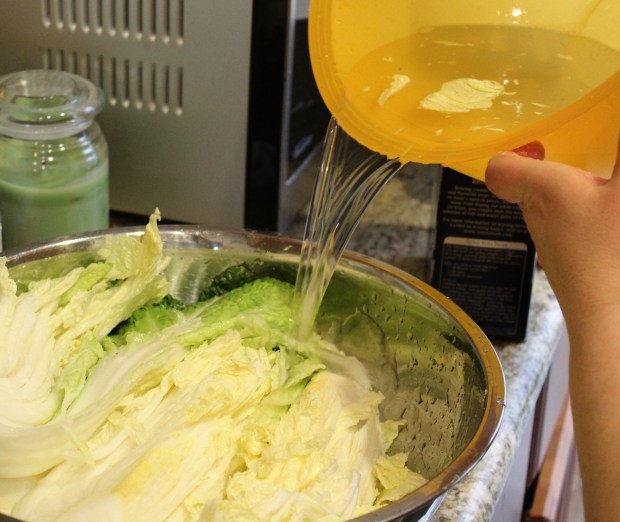
Dunk your cabbage quarters in the brine water, let it drain, then salt between each leaf, concentrating on the thicker, white (non-leafy) portion of the cabbage.  Repeat for all.

Here’s a quick video to help you (and me) see how to prep/brine the cabbage.
 

IMG_1765

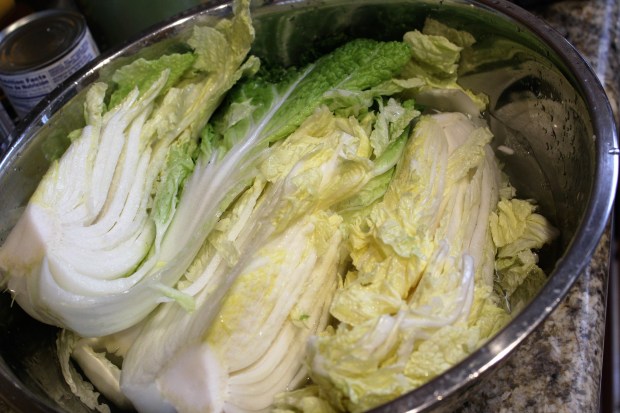
After salting all the cabbage, pour the rest of the salt water over the cabbage and let it brine for about 2-3 hours. (depends on how much salt and water.  taste it after 2 hours to determine)
IMG_1766

Turn and rotate the cabbage halfway through brining


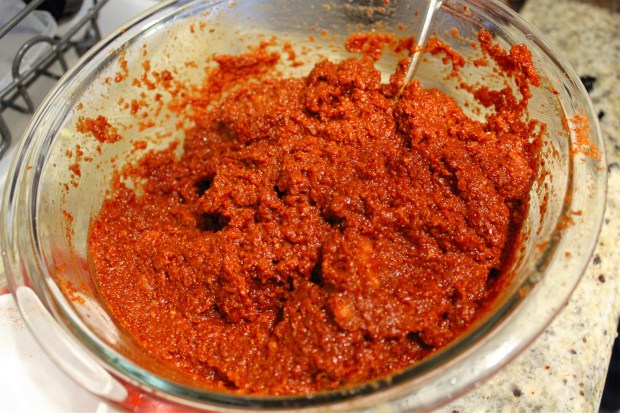
Meanwhile, make the kimchi paste/marinade by chopping your onion, Korean pear, ginger, garlic, and radish, place in a blender, add your fish sauce, then puree.
IMG_1811

Add your red pepper flakes and brown sugar to your puree and you have your kimchi paste

After the cabbage is salty enough, dump out the salt water, then rinse your cabbage in running water 2-3 times and let drain for about 30 mins.  Now get on some food service gloves (the red pepper on your skin will sting) and smear on that kimchi paste all over and between the cabbage leaves.  “Wrap” the outer most leaf around the quarter of cabbage then carefully tuck into a glass jar.  Fill the jar (cover w/ lid) then place in the refrigerator (or to eat it sooner, leave it out at room temperature for a day).  And you lucky ducks with a kimchi refrigerator, you know what to do.

Ingredients

  • 2 Napa (Chinese) Cabbage, washed
  • Lots of Coarse salt (Preferably Kimchi salt)
  • 1 cup fish sauce (I used Tiparos brand Thai Fish Sauce. Korean ones are saltier and less sweet, so add more or less according to taste)
  • 1/2 onion, chopped
  • 1/2 Korean pear, chopped
  • 1 cup Daikon radish, chopped
  • 1 inch ginger root, chopped
  • ~13 cloves garlic, sliced
  • 1 ½ cups coarse red pepper flakes
  • 1 TB brown sugar

*You will need a big, wide bowl to brine, a bucket, food service gloves, and wide-mouth glass (preferably) jar to store kimchi)

Directions

  1. Add lots of salt to a bucket of water (should taste like the sea)
  2. Slice your cabbage in half, vertically. Then slice again, vertically, so you have quartered your cabbage.
  3. Cut off the hard core/stem, but we want enough of the stem to keep the leaves together.
  4. Dunk your cabbage quarters in the brine water, let it drain, then salt between each leaf, concentrating on the thicker, white (non-leafy) portion of the cabbage.  Repeat for all.
  5. After salting all the cabbage, pour the rest of the salt water over the cabbage and let it brine for about 2-3 hours turning and rotating the cabbage halfway through brine period . (depends on how much salt and water.  taste it after 2 hours to determine)
  6. Meanwhile, make the kimchi paste/marinade by chopping your onion, Korean pear, ginger, garlic, and radish, place in a blender, add your fish sauce, then puree.
  7. Add your red pepper flakes and brown sugar to your puree and you have your kimchi paste
  8. After the cabbage is salty enough, dump out the salt water, then rinse your cabbage in running water 2-3 times and let drain for about 30 mins.
  9. With food service gloves (the red pepper on your skin will sting), smear on the kimchi paste over and between the cabbage leaves.
  10. “Wrap” the outer most leaf around the quarter of cabbage then carefully tuck into a glass jar.  Fill the jar (cover w/ lid) then place in the refrigerator (or to eat it sooner, leave it out at room temperature for a day).  And you lucky ducks with a kimchi refrigerator, you know what to do.

*I bought only one Napa cabbage but the recipe makes enough kimchi paste for two Napa cabbages so the recipe calls for two of the cabbages.

IMG_1837_jjangkimchi

Good luck to you (and to me)!

Thanks for reading!

-Flora (and my mom)

DIY Tutorial: Girls Peplum Tankini and Bottoms

IMG_0788 picmonkey words

This week, perhaps due to the Memorial Day holiday, has just flown by and I can’t recall anything particularly special about it (aside from remembering our Soldiers and Veterans), what with it being jumbled together with the repetitious motions of LIFE and having a husband MIA for most of it due to a business trip.  Oh yes, there was a “memorable” incident that will be, I only hypothesize, the first of many more to come, and I chuckle now, but I do dread the days when drama will set up house in my home.  Of course my house is filled with drama now, but this is drama of a different sort of which I speak.  My 6 year old decided he would run away and handed me a note which stated he no longer loved me and that he would leave and never return because I didn’t take him to Burger King after school.  And the punchline is this: there was a girl from his class he wanted to go with.  He would abandon mom for a girl!  Too soon!  Okay, maybe he just really wanted to eat a burger, but I admit I chuckled to think my son had so easily pushed aside me, his mom, for a girl and a burger.  Then it dawned on me that this was a foreshadowing of events to come.  He is my little momma’s boy now but I will have to move aside sooner of later… and so goes life.  It definitely is a reminder to cherish this time of innocence and sweetness of my children before they all grow up and decide mom’s no longer cool.  ha.

Recently Updated7 pic monkey

Now on to the swimsuit.  Does this apple fabric look familiar to you?  If you’ve browsed through my “DIY Tutorial” page, you might have seen this same fabric for another swimsuit I made several years ago for my now 5 yr old.  It has recently been retired due to major wedgie issues so I wanted to try another swimsuit project for my C because it’s been in the 50’s/60’s here and that’s perfect weather for swimming in a “supposedly” heated pool!  (sarcasm)  Finally, today was the first day in weeks where I was able to take off my sweater and sit outside in the sun without freezing my butt off, so what better way to welcome the return of our sun than to make a swimsuit!  I tried to find cute swim fabric at Joann, but was disappointed with how unappealing and boring all their active fabrics were and ended up getting some solid pink active fabric; because you can never go wrong with pink with my girls.  I racked my brain and scoured the internet for some ideas for a solid colored swimsuit and was left unimpressed and uninspired.  As luck would have it, I found the remnants of this apple swim fabric left over from my previous swimsuit venture and after some careful measuring, was able to use almost every inch of that scrap of fabric to make this cute swimsuit for my little C.  The peplum idea came out of necessity because I wouldn’t have been able to cut one continuous piece for a tank with the scrap fabric, but cutting separate pieces for the peplum worked beautifully.

To make your girl’s swimsuit, you will need some swim (knit) fabric that has a a good amount of stretch in all directions.  I probably made this swimsuit (3T) with about a quarter of a yard of fabric remnants, but I really had to cut and measure carefully.  I didn’t use any elastic because the fabric has great stretch and fits her nice and snug and I used bias tape for binding the upper edges of the tank which extends into a ribbon to tie behind the neck.

Materials:

  • about 1/2 yard of swim fabric (depends on the size of your child)
  • bias tape
  • coordinating thread

IMG_0745

Please excuse C’s cute elephant undies, but this is what I used to make my pattern for the swim bottoms.  Add seam allowance and trace around the undies, then cut out the pattern and fold it in half, vertically.  Trim so both halves are identical; that way you have an even piece that’s not lopsided. This is the back piece for the swim bottom.

∗Pick a pair of undies that fit nice and not too loose, then you won’t have to add elastic to the leg opening and waist and your life will be a lot easier.

IMG_0747

Trace your back bottom piece onto a new piece of freezer paper, then using the undies as a guide, draw a curve (like above) for the front bottom piece on one side of the leg opening.

IMG_0748

Cut out the pattern piece, fold it in half vertically, then trace and cut the same curve on the other side of the leg opening to complete your front bottom pattern piece.

IMG_0746

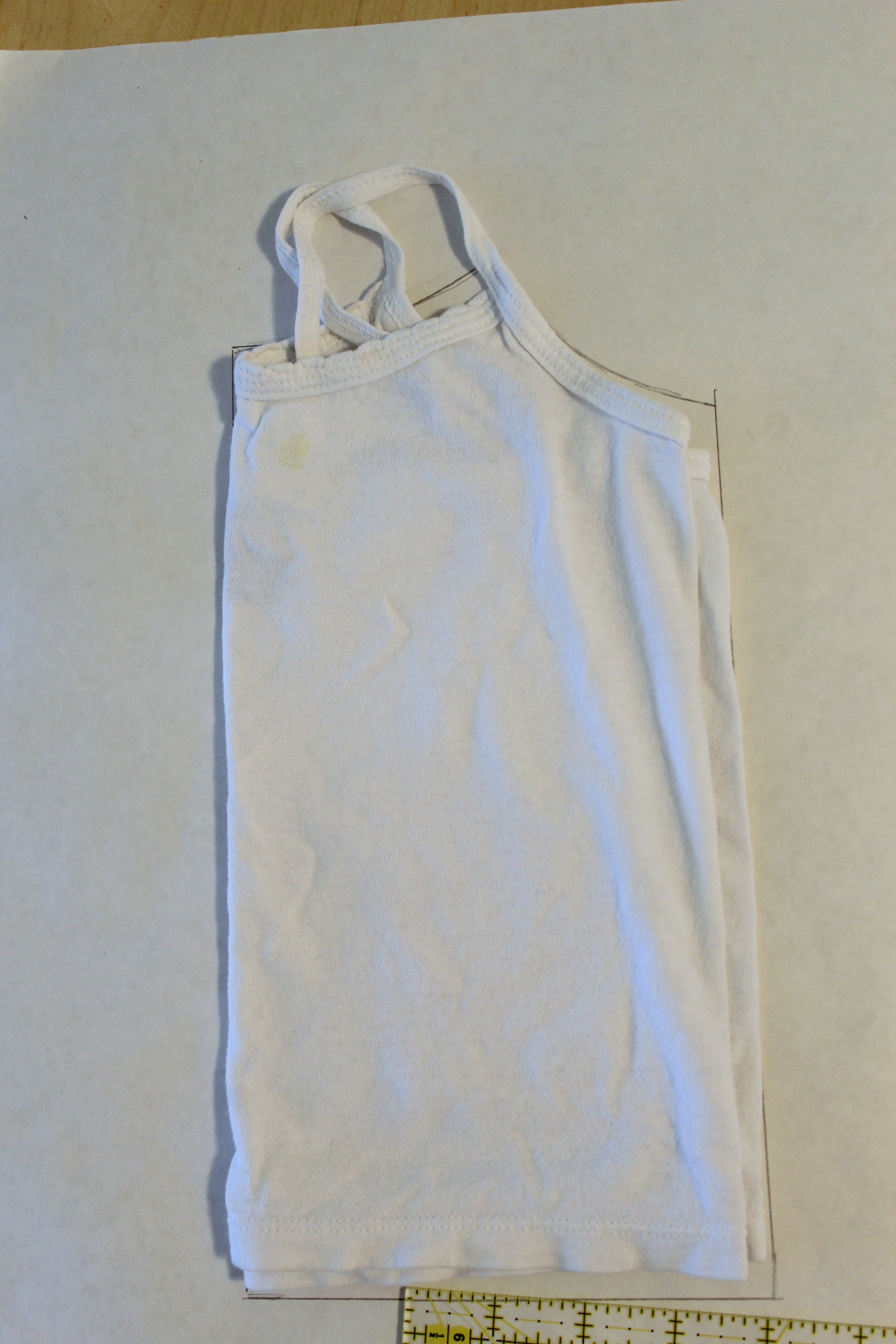
Now, please excuse C’s little undershirt.  Use a tank top that fits nicely, not too tight and not too loose, fold it in half and trace, adding seam allowance.  I traced right at the edge of the tank top and didn’t add extra seam allowance because this undershirt is a bit loose on C and I don’t want the tankini to be too loose.

IMG_0749

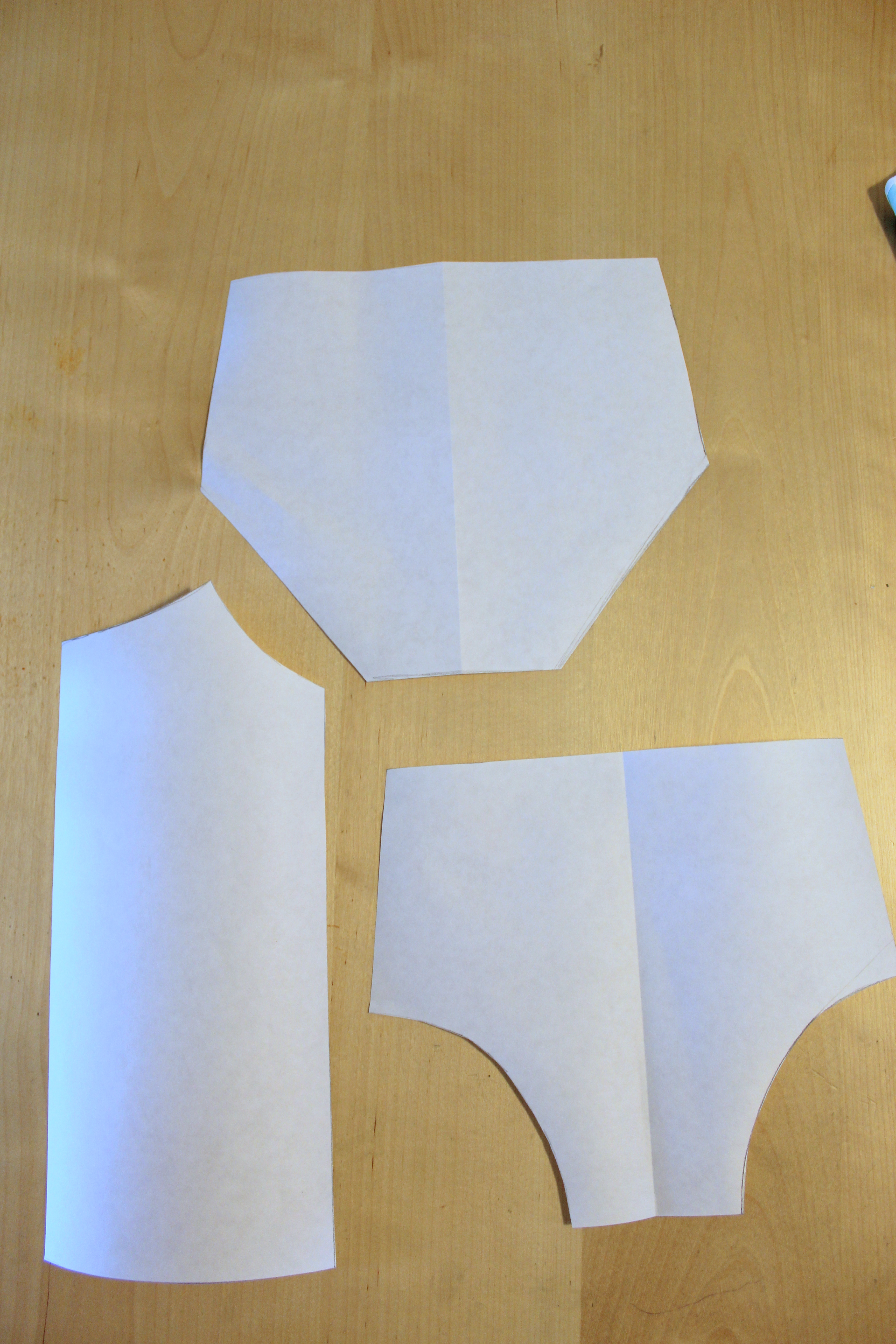
So you should now have pattern pieces that look like this.  I used the same top pattern piece for both the front and the back and later ended up slashing the tank pattern piece across the waist to make a peplum.

IMG_0753

Draw a straight, horizontal line across the top of the tank perpendicular to the armpit point of the tank, as shown above.  That will be your pattern piece for the back of the tankini.  Then figure out where the waist is on your tank piece and draw another horizontal line across so you have a tankini bodice and the lowest third of the pattern piece will be the peplum.  Make sure to cut your upper bodice piece at the waistline (2nd line) that you drew.  Your peplum skirt piece should be 1.5x the width of your entire bodice width and cut 2.

* just fold down the pattern piece at the lines when cutting out your back and Peplum pieces.

IMG_0751

You should have a front bodice, back bodice, 2 peplum skirts, a front bottom, and a back bottom piece.  Make a center mark on the bottom hem of your front and back bodice pieces and for the upper hem of your peplum skirts.

IMG_0754

Take your peplum skirt and run a gather stitch (zero tension, longest stich 4) and pull the thread to make even gathers.  Repeat for the other skirt piece.

IMG_0755

With right sides together, pin one skirt piece to the front bodice piece, evenly distributing the gathers and matching the center marks.  Repeat with the 2nd peplum skirt and the back bodice piece.

∗I used a zigzag stretch stitch and straight stretch stitch to allow the fabric to stretch throughout this project.

IMG_0756

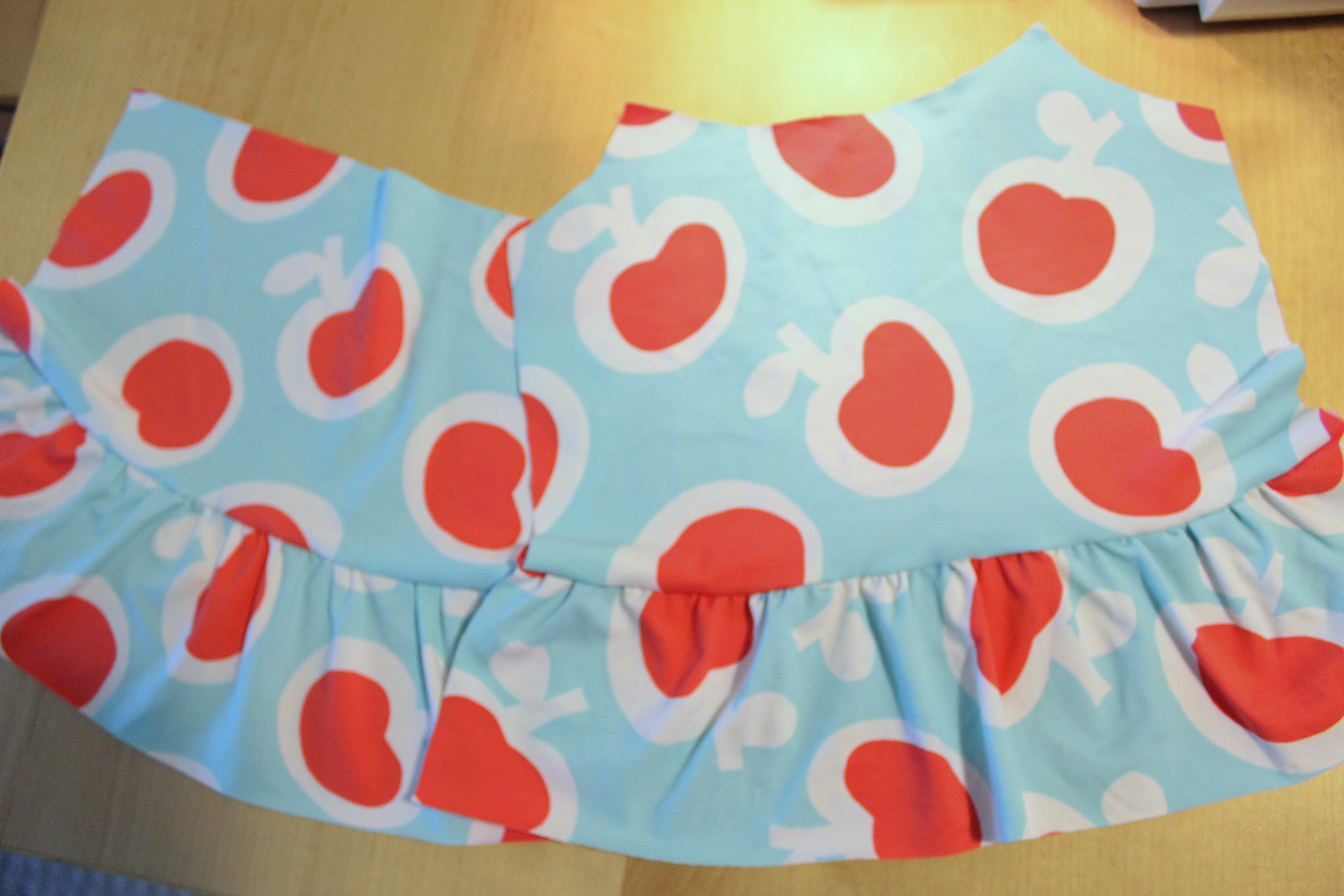
Sew the skirt and the bodice pieces together and you can already see it coming together nicely!

IMG_0758

With right sides together, pin the sides of the front and back tankini pieces and stitch.  Hem the peplum skirt piece if desired.  I was indecisive but ended up hemming mine.

IMG_0762

Pin bias tape to the raw edges of the back and underarms area but leave the neckline.  Sew it together.

∗Upon completing the swimsuit, I would have the neck-tie extend from this strip of bias tape rather than the neckline binding, so the tie will naturally extend to the back of the neck.

IMG_0763

Pin a long piece of bias tape to the neckline that extends beyond the neckline of the tank to create the tie.

∗In hindsight, I would have the tie extend from the back and underarm (in the previous step) bias tape instead, so the tie is not warped when tied behind the neck.

IMG_0759

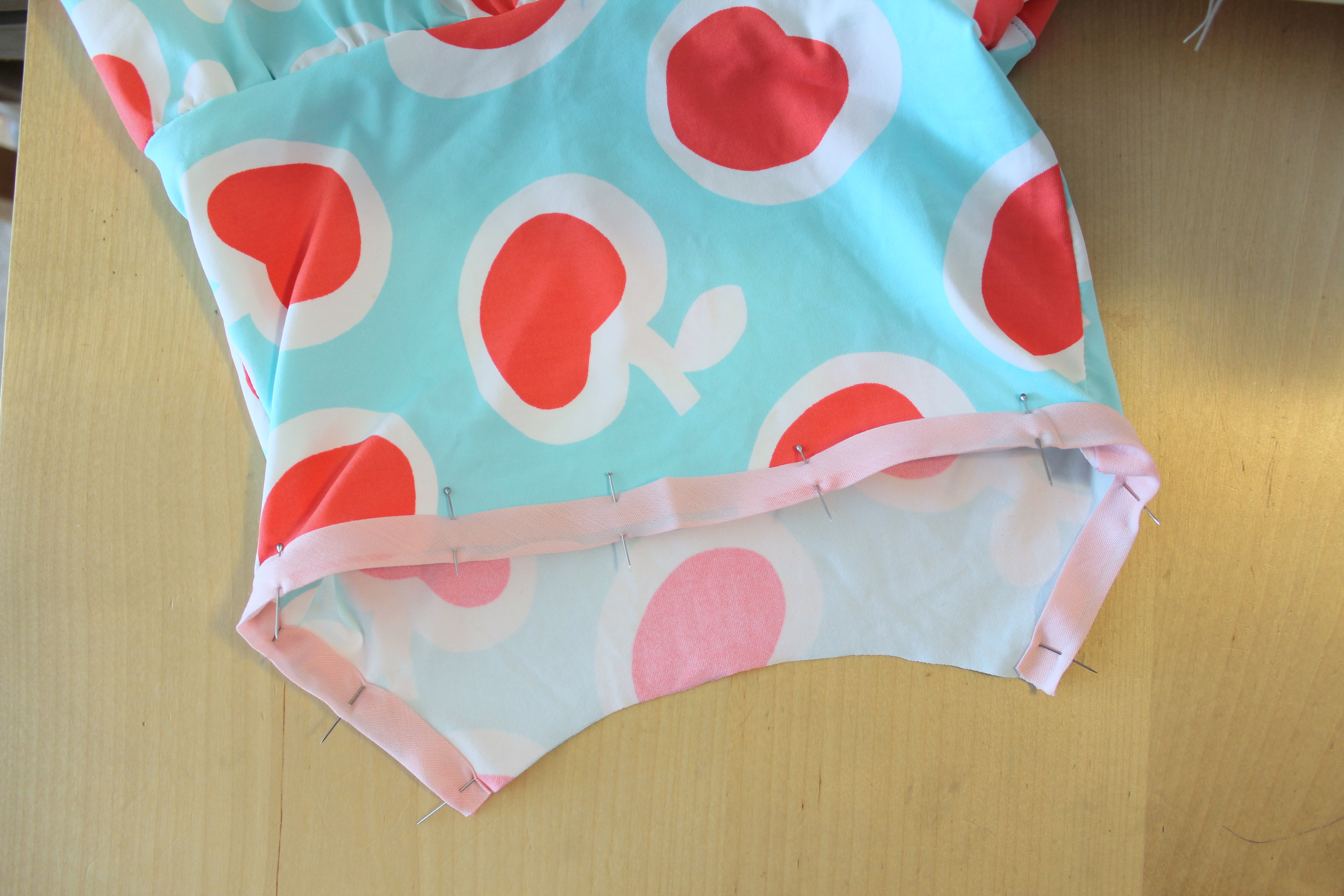
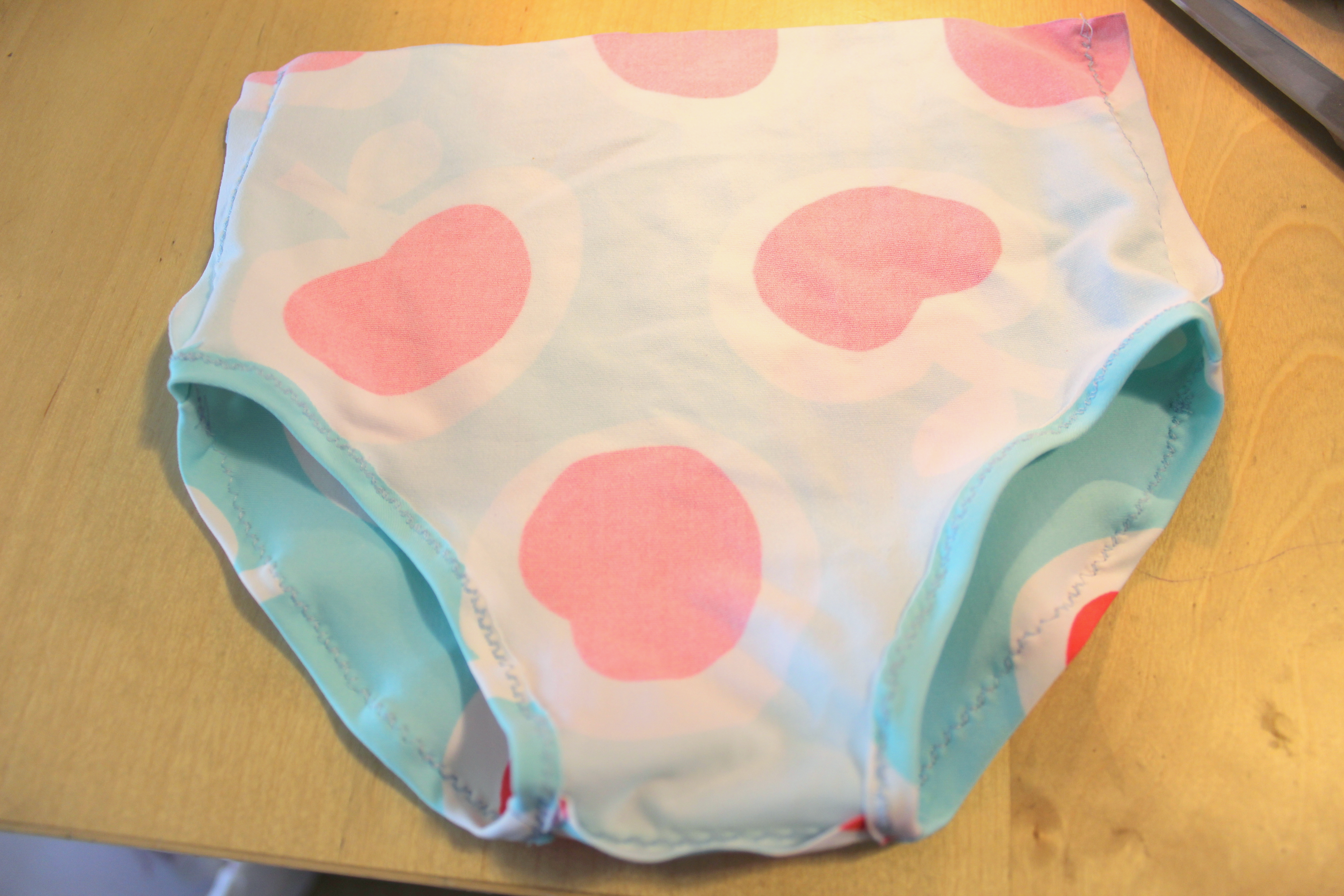
Pin the bottom pieces with right sides together then sew the sides and the bottom of the pieces together.

IMG_0760

Fold over about 1/4-1/2 inch of the the leg openings and stitch.  (If your leg openings are loose around your child’s thighs, then you will have to make a casing and add elastic)

IMG_0761

Fold over 1/2″ of the waist hem, pin, and stitch in place.  (Again, if the waist is too loose on your child, then you will have to make a casing and add elastic) That’s why we used undies that fit nicely so we can make use of the stretch already in the fabric to keep the bottoms from falling off and having to add elastic (which can be a pain).

And it’s done!  It was really a quick afternoon project with no elastic, buttons, clasps, etc.  Super simple and super cute!  I love the way it turned out and now big sis wants a swimsuit like this too!  Too bad I’m out of this adorable apple fabric.

IMG_0767 pic monkey

Thanks for reading! Have an awesome weekend!!!  Maybe it’ll be warm enough to go swimming! (One can hope)

-Flora

DIY Tutorial: Girl’s Tunic Dress

IMG_20150519_232305

I have a growing problem: I like to hoard pretty fabric.  The clothes that I used to toss into the “donate” bag are being stored in every nook and cranny of our home if there’s even an inch of fabric to be salvaged; all because I will “someday” make use of the fabric to upcycle the garment and give it new life.  I think the TLC show “Buried Alive” may soon come knocking at my door if I don’t start whipping out some projects from this stash.  So I decided to use hubby’s old, nice, striped dress shirt with some floral fabric from my other stash to make a tunic dress for my little A.  My little princess loves dresses and every day is a battle to get her to wear pants with the much cooler weather that has been blowing into the bay area as of late.  I am usually successful in threatening convincing her to wear pants or leggings under her dress but my victory only lasts a couple hours when she takes them off at preschool.  I hope to whip out many more dresses and skirts for my girls so I can reduce the ever-growing pile of “fabric” in our already cramped home.

IMG_0696

Here’s hubby’s shirt that he doesn’t wear anymore because it wrinkles too easily? Sure~ I’ll take it!

I originally used a tunic block pattern from the book: “Pattern Making for Kids’ Clothes” but ended up using one of A’s play dresses to make adjustments after cutting the fabric because it would have been much too big for my A.  The book does a great job in explaining the purpose of a block and sloper (which I had never heard of before… linguistics major here) as well as how to use these basics to create an entirely unique design.  This book was also a loan from my library and it really makes me feel like I’ve hit the jackpot when I can gain access to these awesome pattern books without having to buy the book myself!  I love shared reading. 🙂

To make your own pattern from an existing dress, just fold the dress in half, lengthwise, trace, and add seam allowance.  I ended up doing basically that since the tunic block needed to be adjusted due to it being too big.

Recently Updated5

Tunic dresses like these are my favorite to make and to put on my little girls. I love pockets on dresses too and my A totally agrees.

IMG_0692

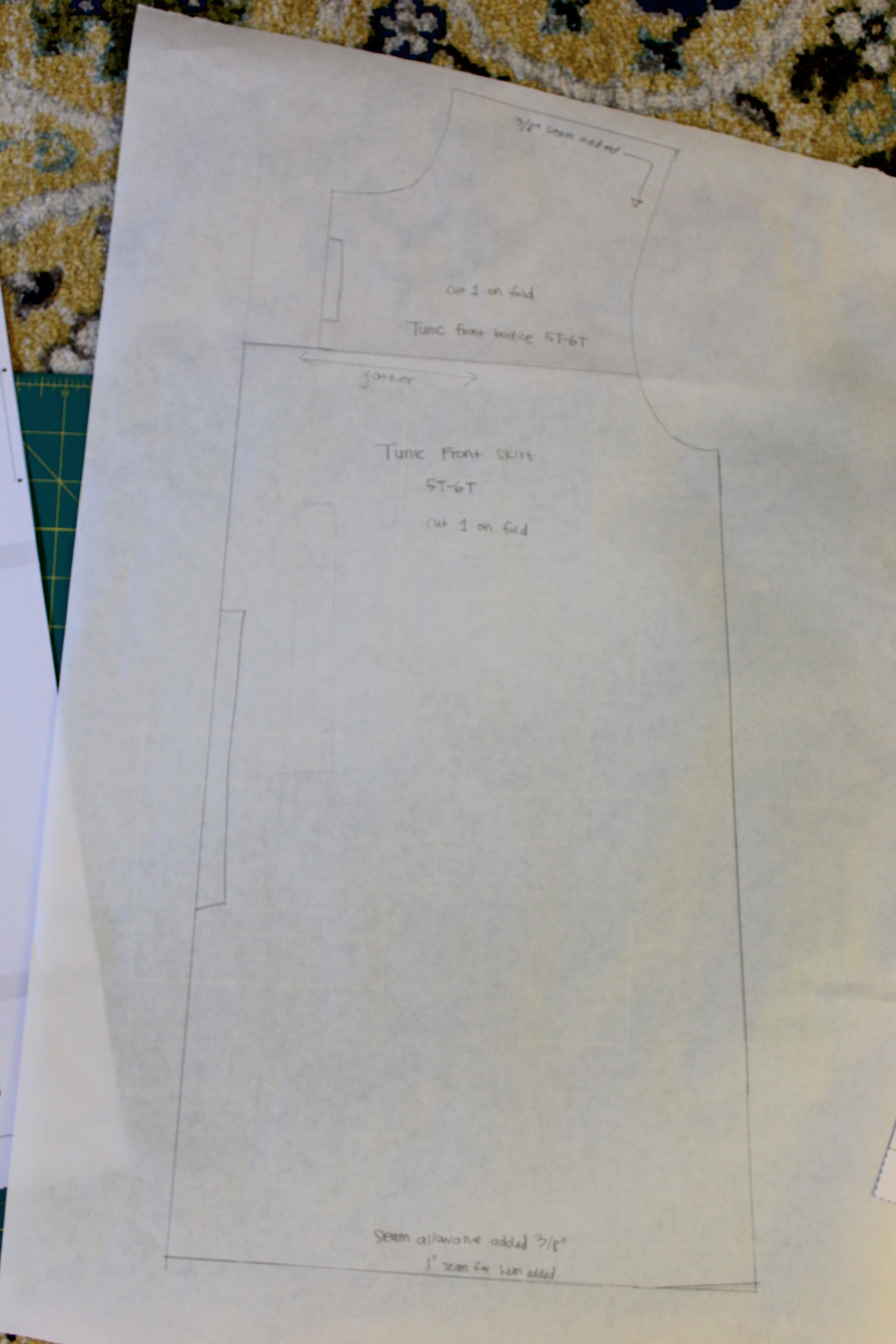
Trace the tunic block and make adjustments to make a tunic dress.

I printed the tunic block following the link given in the book, pieced it together, traced it onto freezer paper, then made my adjustments.  This tunic block is the 5-6yrs size and it was much, much too big for my 5 yr old.  I wanted to make a tunic dress so I lengthened the skirt, slashed through the armpit of the pattern to make a separate bodice, and added 1.5″ to the skirt width to make gathers (since it’s on a fold, you would be adding 3″ of fabric for gathers).

IMG_0693

After all the adjustments for the front of the tunic dress.

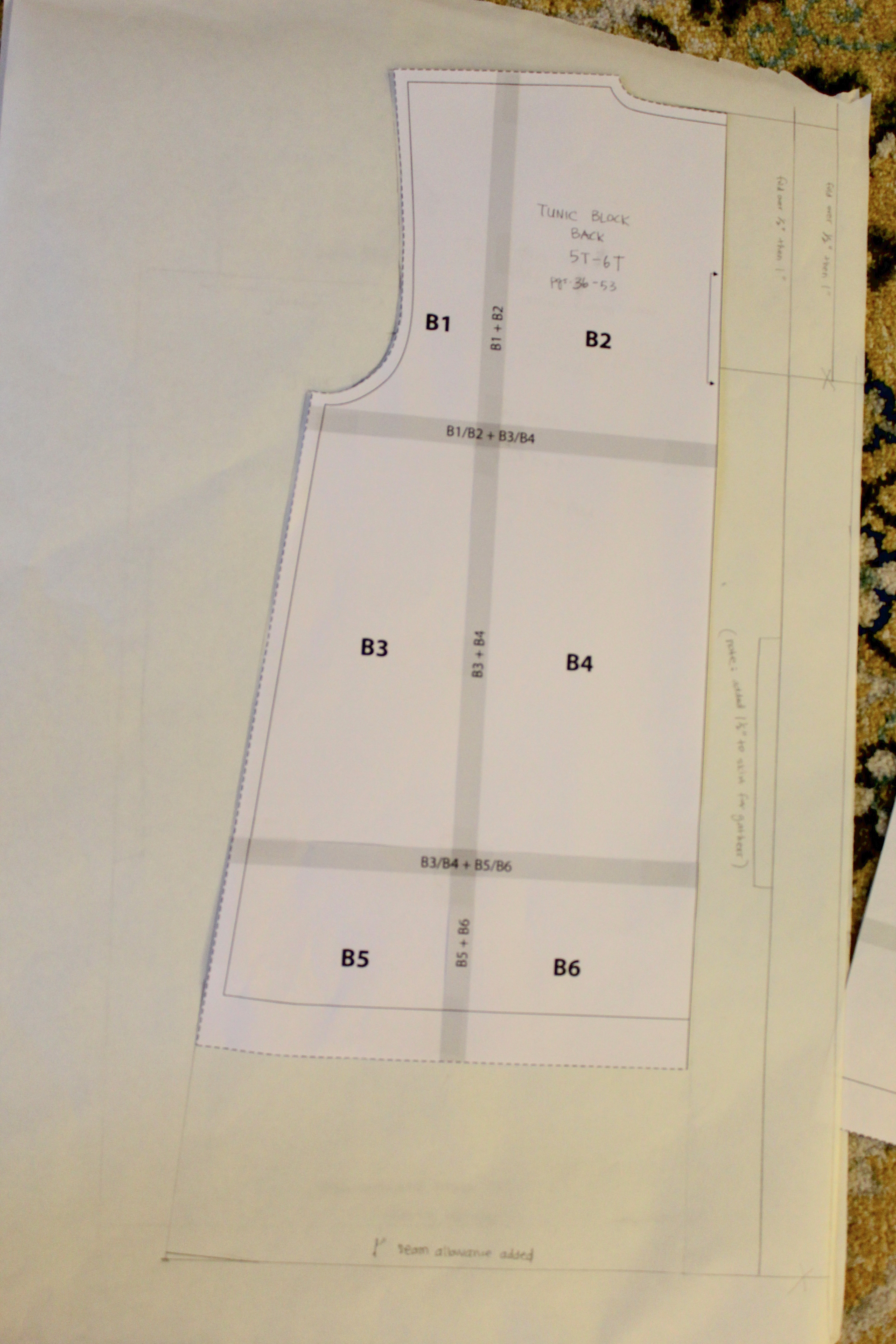
IMG_0694

Trace the back tunic block and make adjustments, keeping in mind the foldovers for button plackets

IMG_0695

I did basically the same thing for the back of the tunic: lengthened the skirt, slashed horizontally through arm curve, added 1.5″ width to make the skirt gathers.  But this time, I adjusted the back bodice portion so I have enough fabric to fold under twice and overlap for buttons and button holes.

Add 1.5″ from the first line for one side of the back bodice, then add another 1″ from the middle line you just drew for the other side of the back bodice. Make sure you cut mirror images of the bodice pieces, one should have a longer “flap”.

IMG_0697

These are my pieces all ready to go.

I ended up having to adjust and cut a narrower shoulder width for the bodices later…  Also, eyeballed and cut out a pocket pattern and used the sleeve from the tunic block, just shortened it since it came as a long sleeve.

IMG_0699

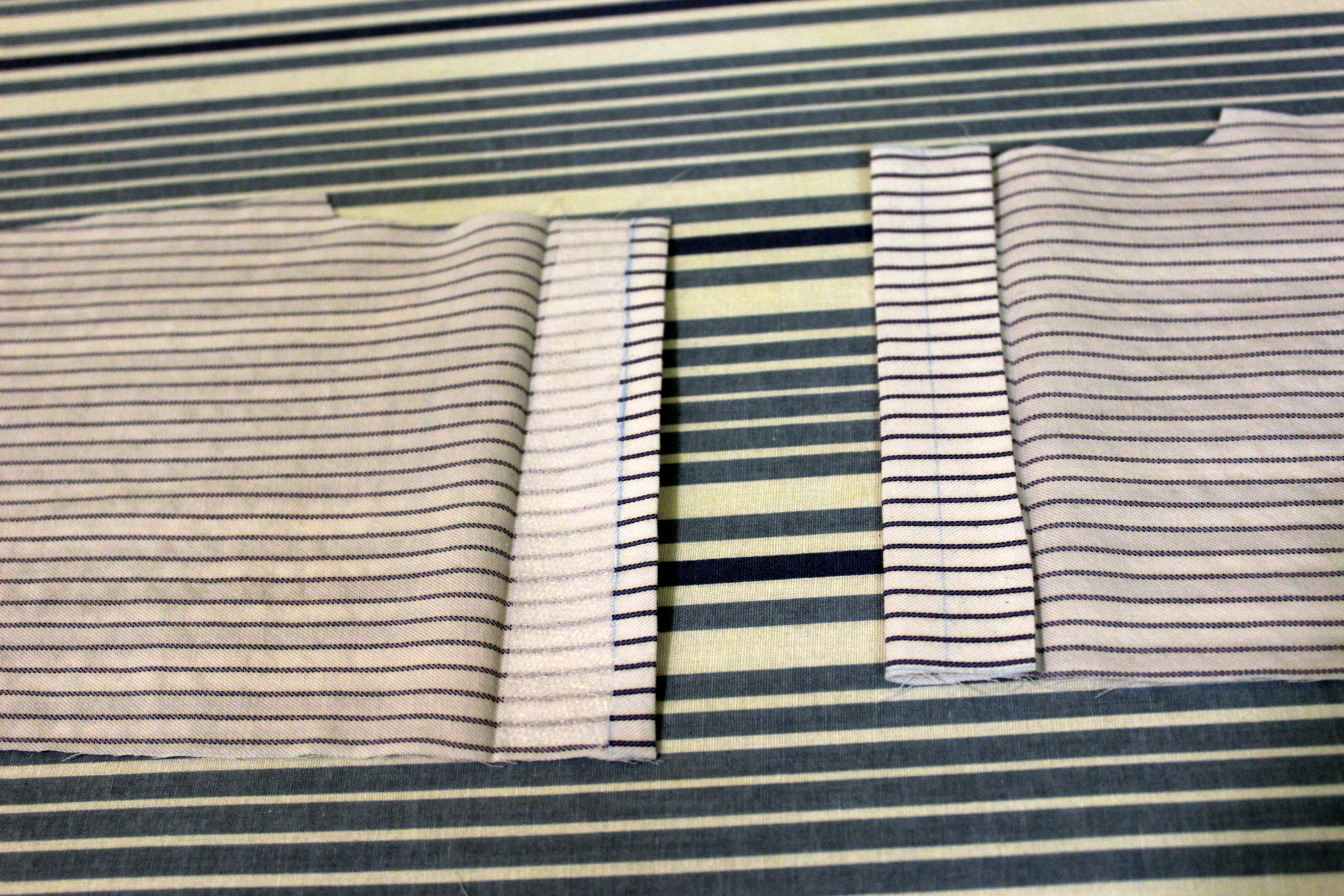
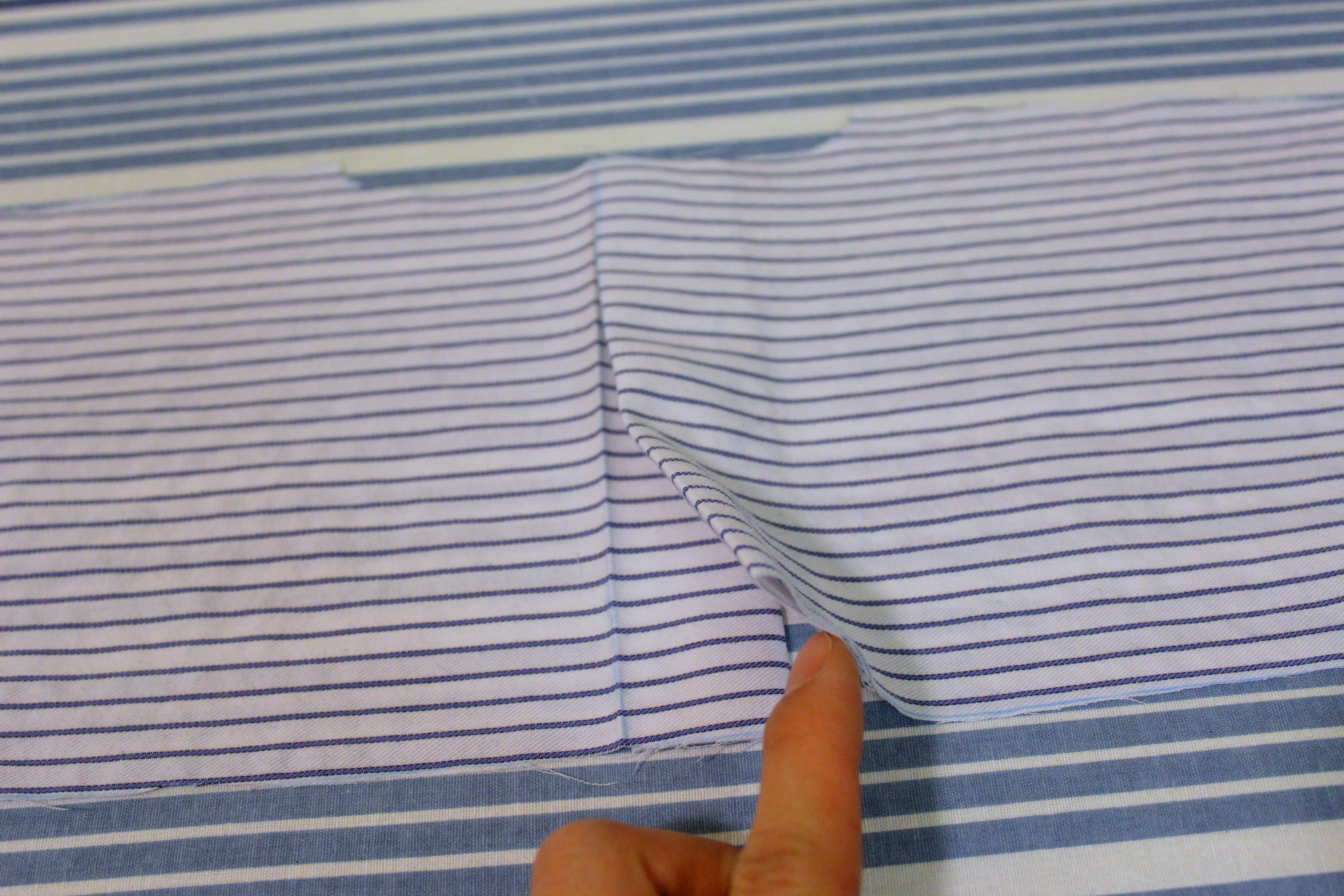
Iron 1/2″ then 1″ for both sides of back bodice.

Add a strip of interfacing to the buttons/buttonhole plackets and then iron a 1/2″ then 1″ to the main bodice line for bodice with the shorter flap.  Do the same thing for the other bodice: you fold over 1/2″ then 1″ and iron.

IMG_0700

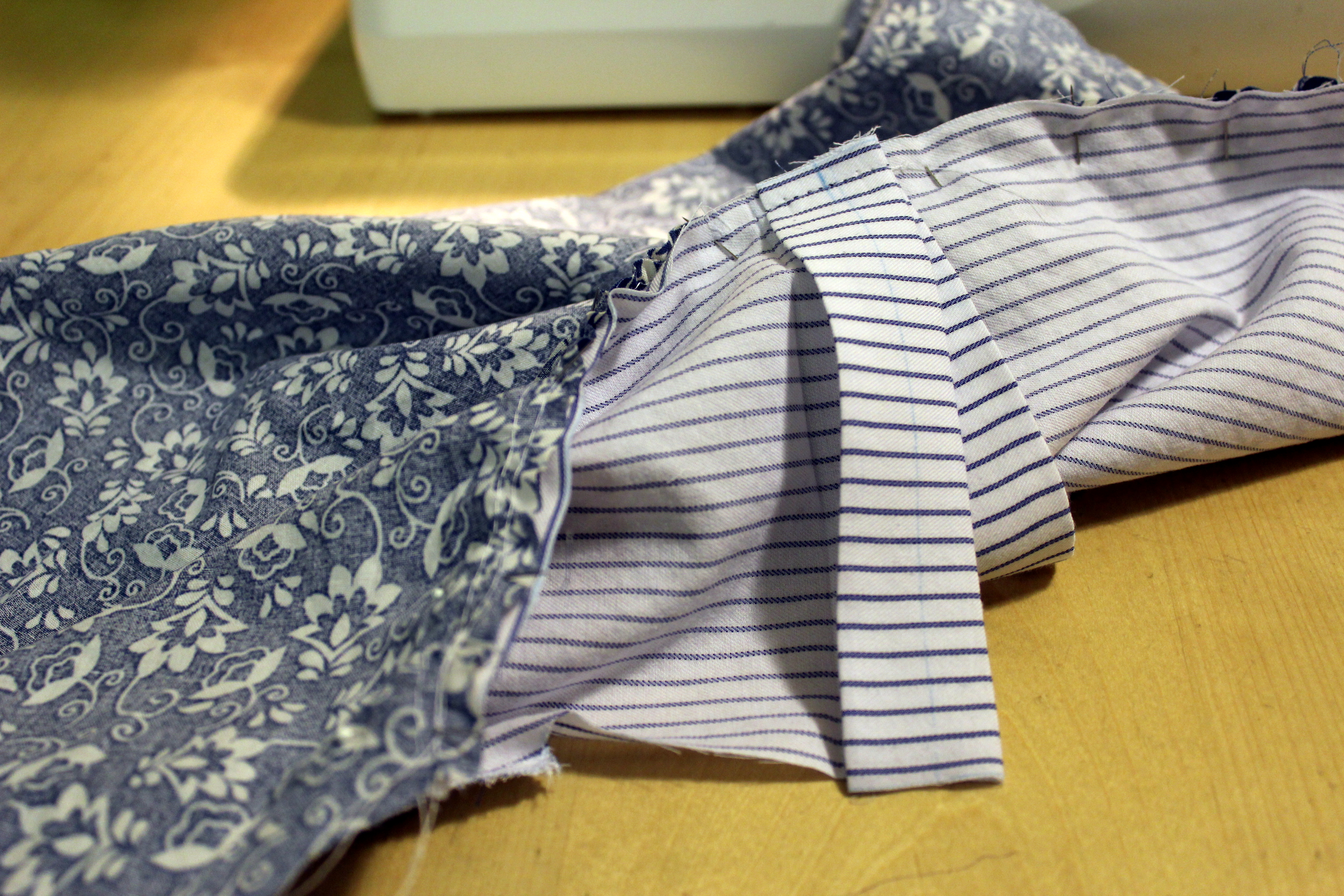
line it up to overlap an inch. Should match your front bodice piece.

You should have a 1″ overlap of the back bodice like in the picture above so you can have your buttons on the bottom placket and buttonholes on the top placket.

IMG_0701

pin and sew across shoulders

With right sides of fabric facing, sew the shoulder seams.  See how wide the shoulders are?  I cut it down to size using a nice fitting dress as reference after I had already sewed the shoulders together.  Zigzag stitch raw edges.

IMG_0702

Pin the two back bodice pieces together or you can baste it together, if you prefer.

IMG_0703

Gather stitch

Stitch straight across the top of the skirt piece for both the front and back skirt pieces using a long stitch length (4) and “0” tension.

IMG_0704

Pull threads to gather

Pull the thread on the ends to make gathers and evenly distribute them to fit the width of the bottom of bodice.

IMG_0705

attach skirt to bodice front and back. Skirts are still two separate pieces.

Pin the two skirt pieces separately onto the bodice front and the bodice back with rights sides facing.  Then stitch in place.  Zigzag stitch raw edges.

IMG_0706

topstitch skirt seam to bodice.

Iron the seam up towards the bodice then topstitch along the edge of the bodice close to the skirt.

IMG_0710

attach sleeves to armholes.

Pin your sleeves onto the armhole curve and stitch in place.  Zigzag stitch raw edges.

IMG_0708

prepare pockets

Prepare you pockets by ironing your raw edges onto the wrong side of the pocket.  You can baste the edges if you want to.  I added elastic to the top of the pocket to create gathers and also to give it stretch when the hand goes into the pocket.  Forgot to take pictures of that step.  Basically, cut a thing strip of elastic to the width you want the pocket top to be, pin the elastic to both top ends of the pocket, pin the middle of the elastic to match the middle of the pocket top, then stretch the elastic as you sew it onto the pocket top.  Here’s an example tutorial by Indiesew.  They use it on knits, but basically the same thing I’m doing here.

IMG_0712

prepare pockets and attach to skirt. I did it at the end, but it may be easier while two skirts are not attached.

Find where you want to place your pockets on the front of your skirt, pin it on, and stitch in place.  Think where their hands would naturally fall.

IMG_0711

sew on the pockets

Backstitch a small triangle into the top corners of the pocket for added durability.

IMG_0716

Finish neckline

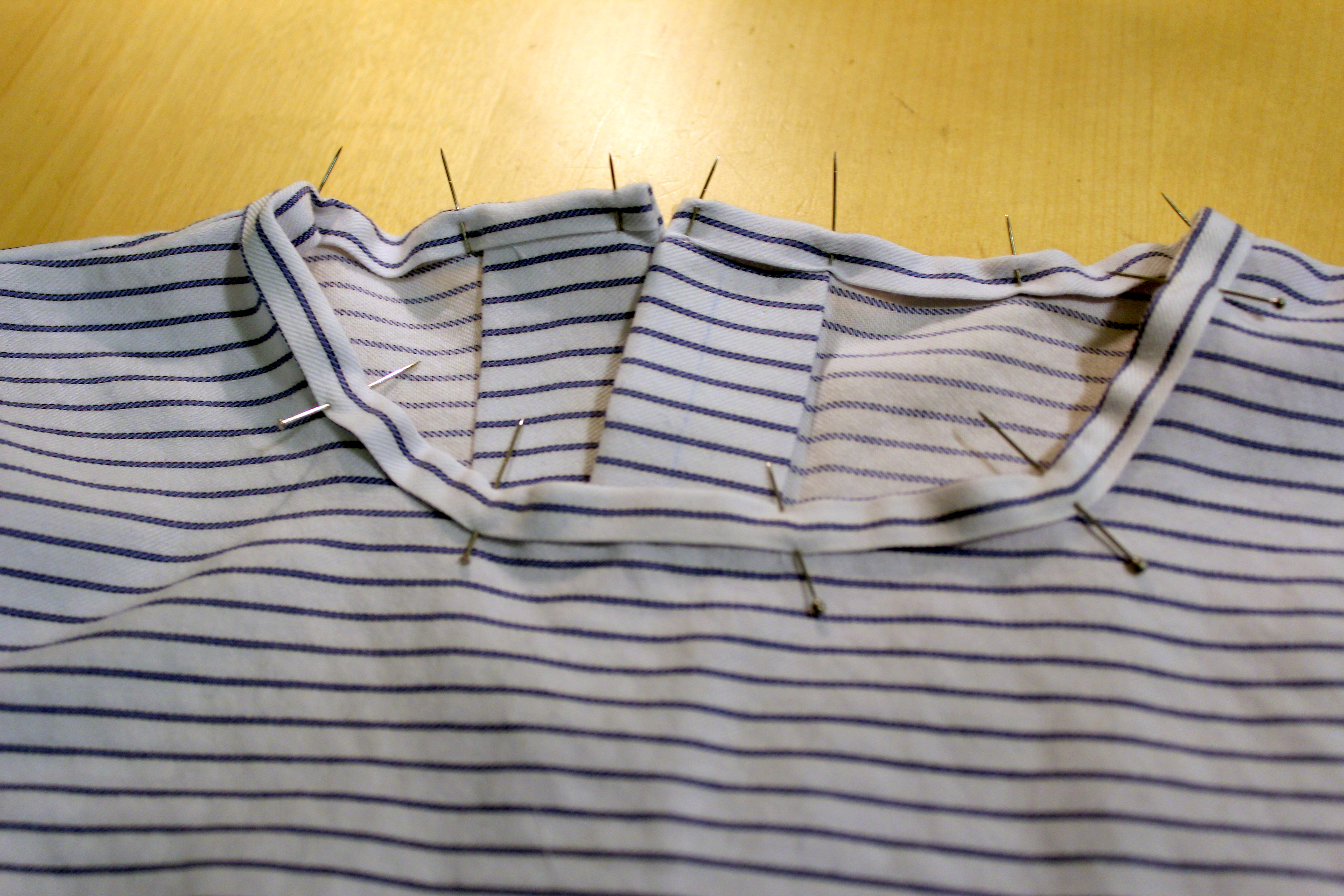
Cut out a strip of 1.75″ wide fabric and make your double fold bias tape then pin and stitch in place.

IMG_0709

sew sides of skirt all the way to the bottom of the sleeves. I wasn’t going to do sleeves but changed my mind later so this picture doesn’t show sleeves.

Sew the skirt sides and the lower sleeves together with right sides facing.  Zigzag stitch raw edges.

IMG_0717

sew on the “hem” part of skirt.

I cut out about a 2″ strip of fabric to match the width of the skirt to hem the bottom for a cleaner look.

IMG_0718

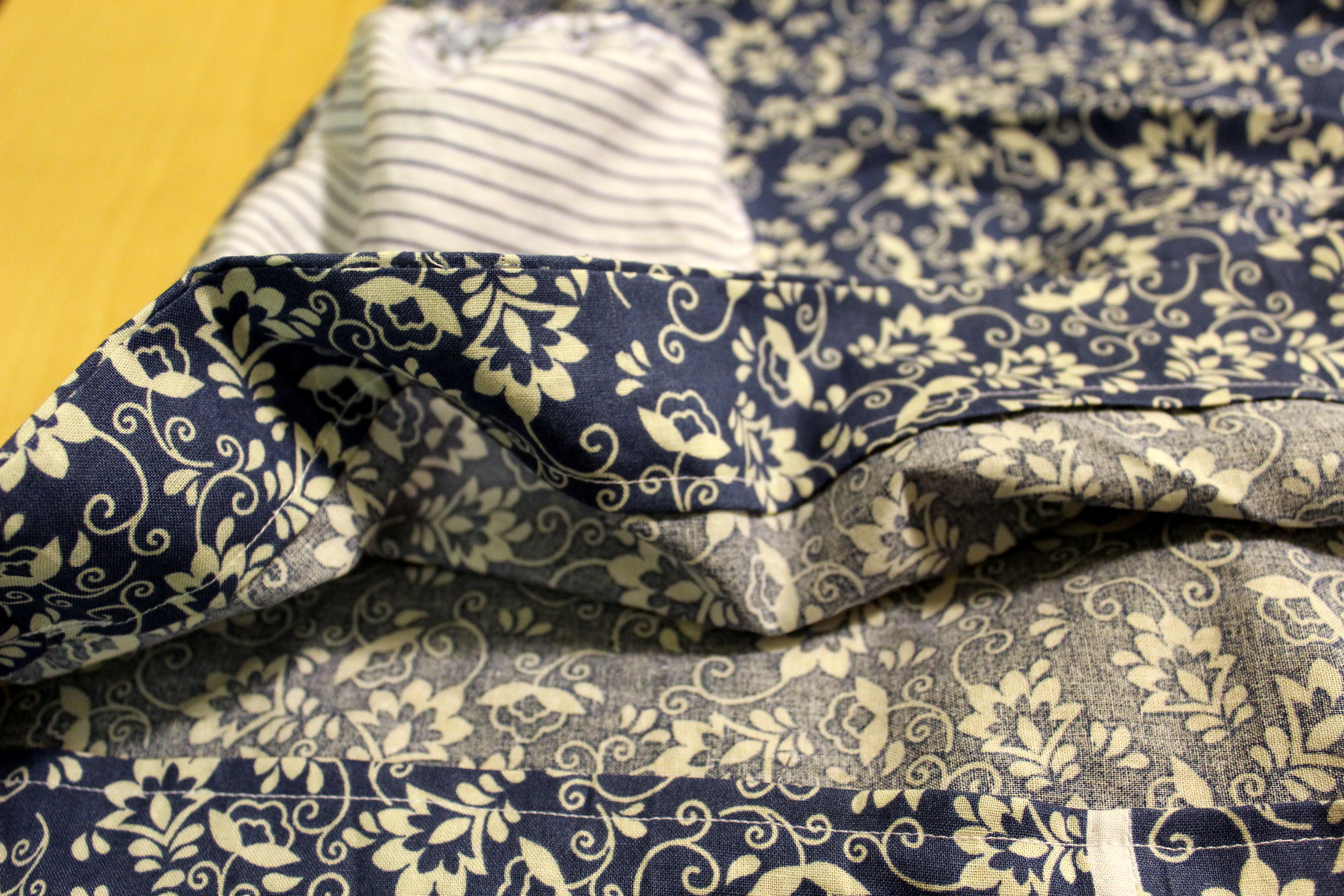
finish the hem

Fold and iron at the seam then iron the raw edge onto the wrong side, pin, and sew.  Hem your sleeve as well by folding in and ironing about 1/4″ of the raw edge onto the wrong side then folding in and ironing again about 1/2″, pin and sew.

IMG_0719

find desired button placement

Now figure out how many buttons you want and place them on the back bodice.

IMG_0720

mark where you want your button holes

Carefully mark where the buttonholes need to go, make you button holes, and sew on your buttons.

IMG_0721

Finish buttonholes and add buttons!

Finished buttons and buttonholes always leaves me with such a sense of accomplishment!  Perhaps because I was afraid to buttonholes for the looooongest time.

IMG_0725

Voila~ Done!

IMG_0729

My little girl wanted to wear it to school the next day and I couldn’t say no when she was so willing to wear her denim leggings under them and put on her cardigan.  Good thing I took pictures of her in the dress before school because when I picked her up, she had pink glittery paint all over her dress.  I started to worry the paint wouldn’t wash off and couldn’t get my mind off of the paint the entire drive home.  Needless to say, I hand-washed the dress right when we got home and the paint did come off with a bit of scrubbing.  Don’t worry, I won’t freak out next time.  It’s just the day after I finished it, so I was a bit sensitive (and sleep-deprived).  🙂

Go ransack your hubby, brother, whoever’s closet and there’s bound to be shirts they don’t wear that have perfectly good fabric for making children’s clothes.

Until next time… Have a great week and thanks for reading!

-Flora